
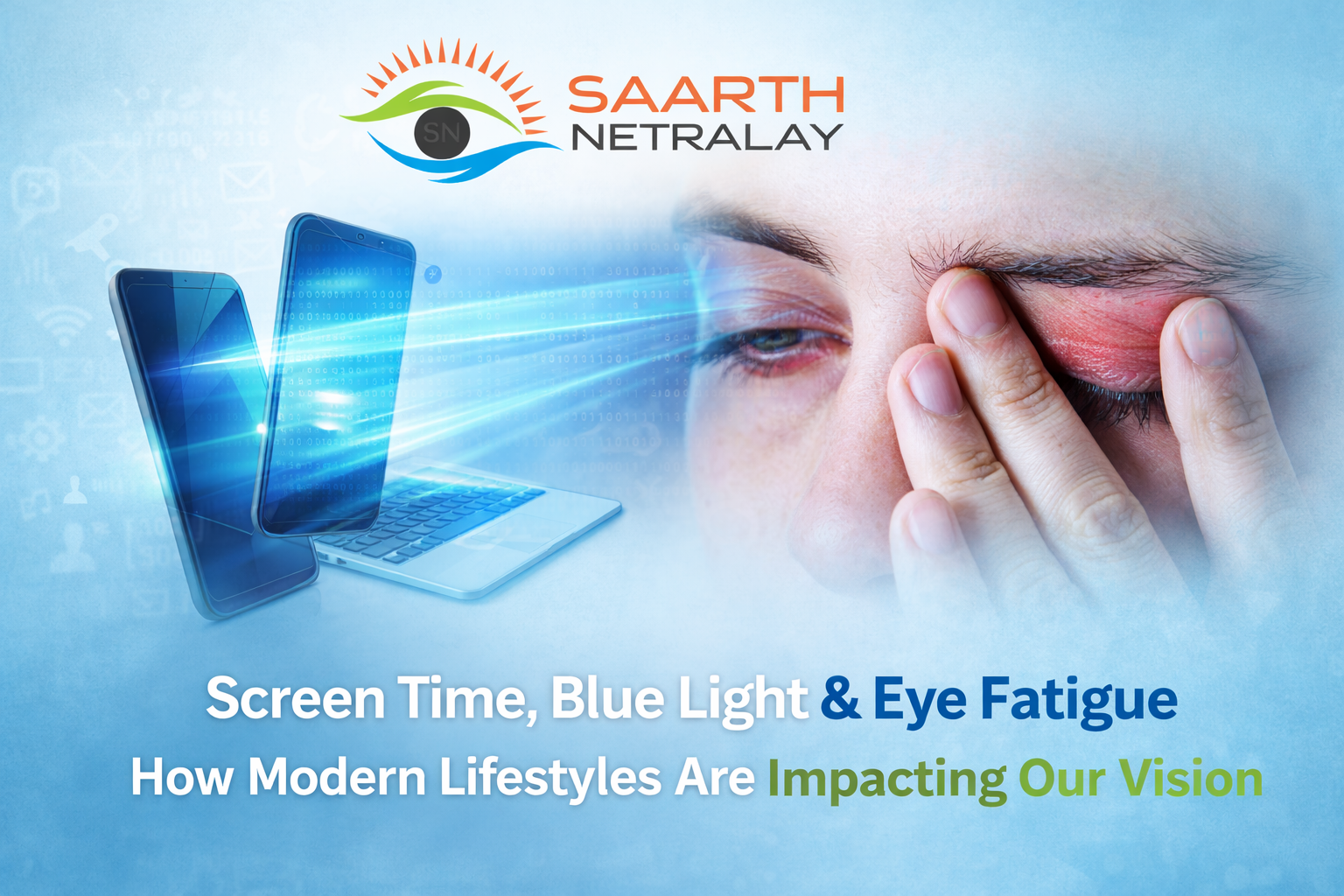
Understanding the Digital Eye Health Crisis
Digital screens have become an unavoidable part of modern life. From smartphones and laptops to tablets and televisions, most people spend 8–12 hours a day staring at screens. While technology has made life easier and more connected, it has also led to a silent but growing health issue—digital eye fatigue.
Eye specialists across India are seeing a sharp rise in patients complaining of eye strain, dryness, blurred vision, and headaches, even among young adults and children. At Saarth Netralay, many patients from Dombivli and Kharghar report symptoms directly linked to prolonged screen exposure.
What Is Digital Eye Fatigue?
Digital eye fatigue—often called Computer Vision Syndrome (CVS)—is a group of eye and vision-related problems caused by extended use of digital devices.
Unlike reading printed material, digital screens:
- Continuously emit light
- Require constant refocusing
- Reduce blink rate by nearly 50%
This combination puts excessive stress on the eyes.
According to the American Optometric Association, more than 60% of adults who use digital devices regularly experience symptoms of digital eye strain:
https://www.aoa.org/healthy-eyes/eye-and-vision-conditions/computer-vision-syndrome
Common Symptoms You Should Not Ignore
Many people ignore early signs, assuming they are temporary. However, persistent symptoms can indicate deeper strain on the visual system.
Common symptoms include:
- Dry, itchy, or burning eyes
- Blurred or fluctuating vision
- Frequent headaches
- Eye fatigue or heaviness
- Neck, shoulder, and back pain
- Difficulty focusing after screen use
If left unaddressed, these issues can affect work productivity, sleep quality, and overall wellbeing.
The Role of Blue Light in Eye Discomfort
Digital devices emit blue light, a high-energy visible light that penetrates deep into the eye. While blue light is also present naturally from sunlight, artificial exposure from screens is prolonged and continuous.
How Blue Light Affects the Eyes
- Increases eye strain
- Disrupts sleep cycles by suppressing melatonin
- Contributes to visual fatigue
Research by the National Institutes of Health (NIH) suggests prolonged blue light exposure may contribute to retinal stress over time:
https://www.ncbi.nlm.nih.gov
While blue light does not cause immediate eye damage, long-term exposure without proper eye care can worsen discomfort and visual fatigue.
Impact of Screen Time on Children and Teenagers
Children today are exposed to screens at a very early age—online classes, mobile games, and digital entertainment have become routine.
Children’s eyes are:
- More sensitive to light
- Still developing
- More prone to refractive changes
Excessive screen use in children has been linked to:
- Increased risk of myopia (short-sightedness)
- Poor attention span
- Eye strain and headaches
Limiting screen time and scheduling regular eye examinations is essential during growing years.
Workplace Screen Exposure and Adult Eye Health
Office professionals are among the most affected groups. Continuous computer use without breaks can cause:
- Chronic dry eye syndrome
- Persistent headaches
- Reduced work efficiency
Improper screen height, poor lighting, and incorrect seating posture further worsen symptoms.
Regular eye evaluations help identify early strain-related changes and prevent long-term complications.
Practical Ways to Protect Your Eyes in the Digital Age
1. Follow the 20-20-20 Rule
Every 20 minutes, look at something 20 feet away for at least 20 seconds.
2. Maintain Proper Screen Distance
- Mobile phones: 12–14 inches
- Computer screens: arm’s length
3. Blink More Often
Blinking keeps the eyes lubricated and prevents dryness.
4. Adjust Screen Settings
- Reduce brightness
- Increase font size
- Use anti-glare screens
5. Use Proper Lighting
Avoid using screens in dark rooms to reduce contrast strain.
Why Regular Eye Check-Ups Are Essential
Even if vision appears normal, regular eye check-ups help:
- Detect early eye strain
- Identify dry eye conditions
- Monitor refractive changes
- Prevent long-term vision problems
Eye specialists can also recommend:
- Computer glasses
- Lubricating eye drops
- Personalized visual ergonomics
Explore available eye care services:
👉 https://saarthnetralay.com/services/
Meet our experienced eye specialists:
👉 https://saarthnetralay.com/our-doctors/
When Should You Consult an Eye Specialist?
You should seek professional care if you experience:
- Persistent eye discomfort
- Frequent headaches
- Blurred vision after screen use
- Difficulty focusing
Early consultation prevents minor problems from becoming chronic conditions.
Book your eye health evaluation today:
👉 https://saarthnetralay.com/contact-us/
Final Thoughts
Digital devices are now a permanent part of modern life, but eye damage doesn’t have to be. With correct screen habits, awareness, and regular eye examinations, it is possible to maintain comfortable vision and long-term eye health.
Taking care of your eyes today ensures clearer, healthier vision for the future.